
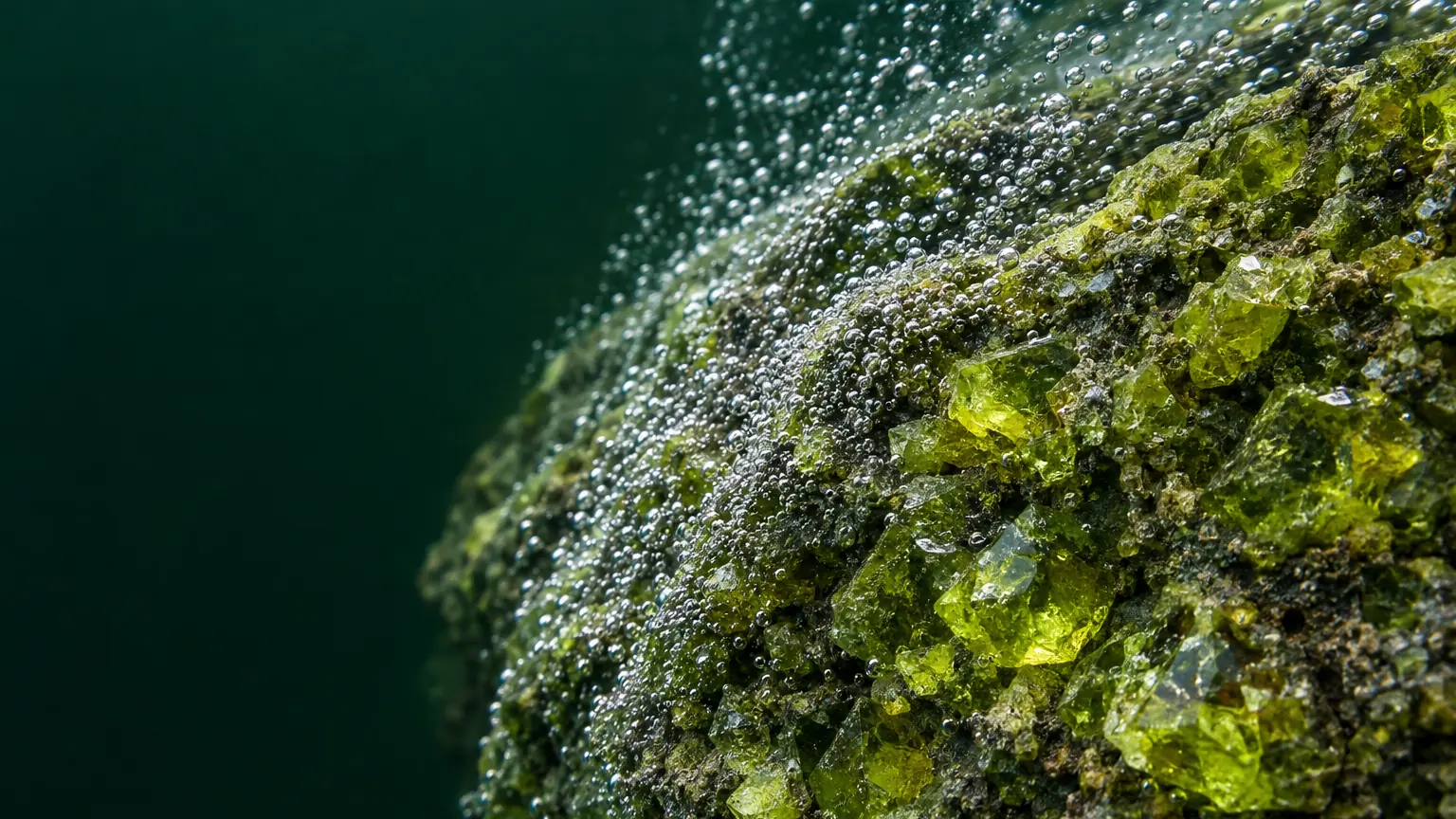
 Illustrative image
Project · Cavilysis H2
Hydrogen from rock and water
Cavilysis H2 is intended to produce hydrogen at the point of use: from iron rich olivine and water, in a compact reactor.
The challenge
Hydrogen today is almost entirely fossil based
Industry needs hydrogen. Today's production routes have clear limits.
million tonnes of hydrogen are consumed worldwide each year (2024)
of this is produced with low emissions
- Today, hydrogen comes almost entirely from natural gas and coal.
- The largest consumers are refineries and industry.
- From natural gas and coalreleases large amounts of CO2
- From electricity (electrolysis)requires very large amounts of electricity
- Delivery to the customercompression and transport drive up costs
The gap: a compact process that operates on site.
The principle
Modelled on nature
Where iron bearing rock meets water, hydrogen forms in the subsurface. In nature, this process is very slow.
The concept
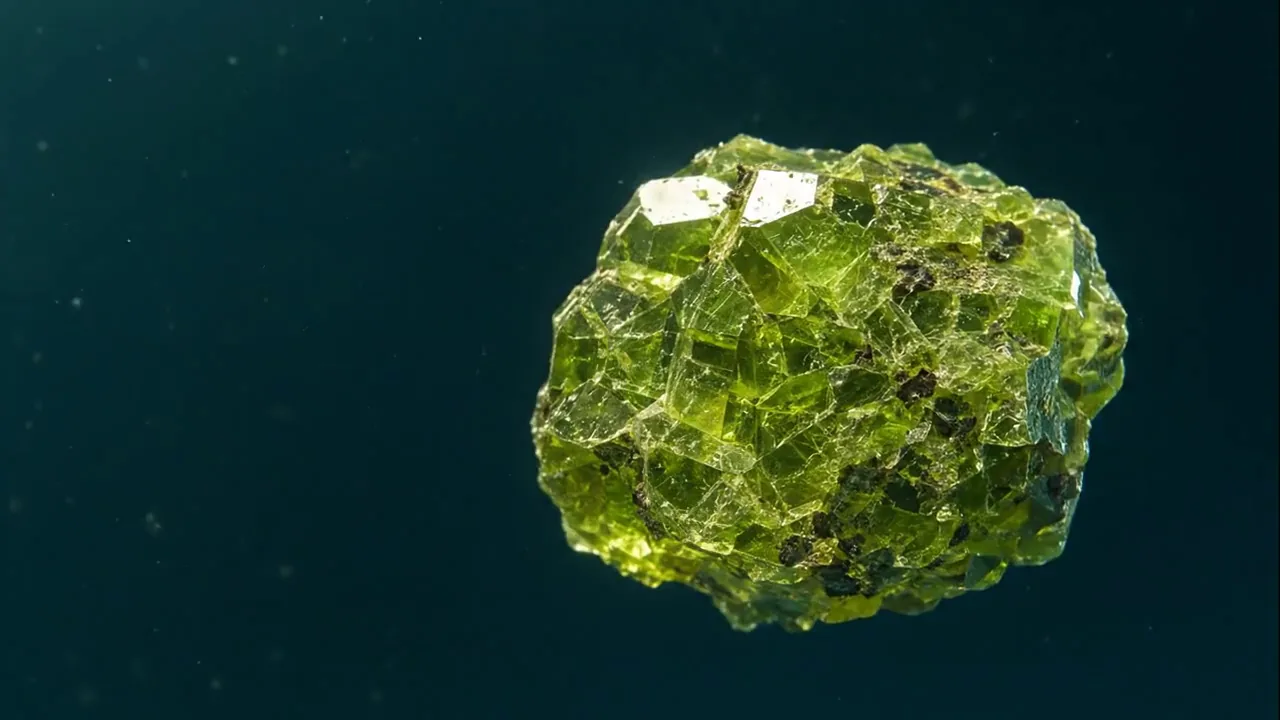
The film is a concept visualisation of the principle and not a measurement result. The reactor is intended to accelerate the natural process considerably. ETH Zurich is responsible for validation and testing.
- Feedstocks
- Iron rich olivine and water
- Product
- Hydrogen, plus magnetite and quartz
- Intellectual property
- Patent application, first filing 2025
The core
Cavitation in simple terms
The film is a concept visualisation and not a measurement result. The flow runs from left to right. The technical term for this process is hydrodynamic cavitation. Its physics is well established. We intend to demonstrate its effect on our two reactions in the laboratory.
The reactor
The first prototype has been built
It replicates the Cavilysis H2 process on a small scale. The four steps of the animation can be selected individually.
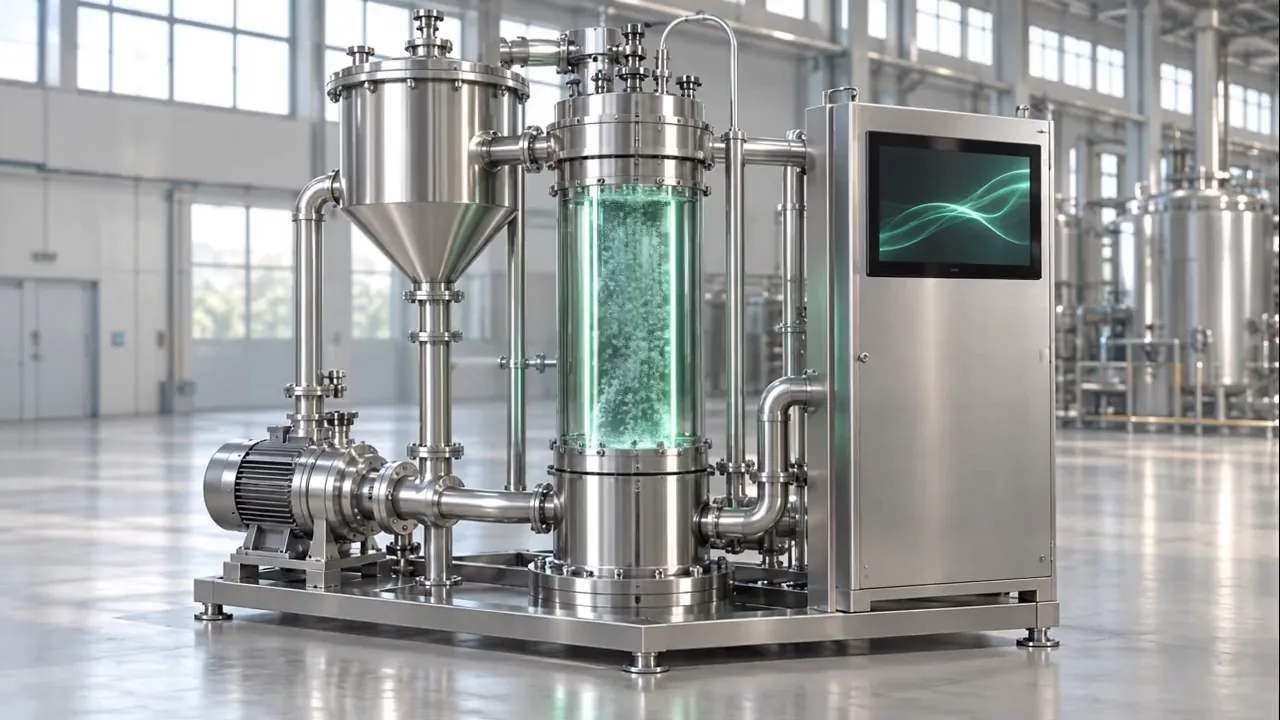
The animation shows the Cavilysis H2 reactor and the intended process flow. It is a concept visualisation, not a photo of the prototype as built and not a measurement result.
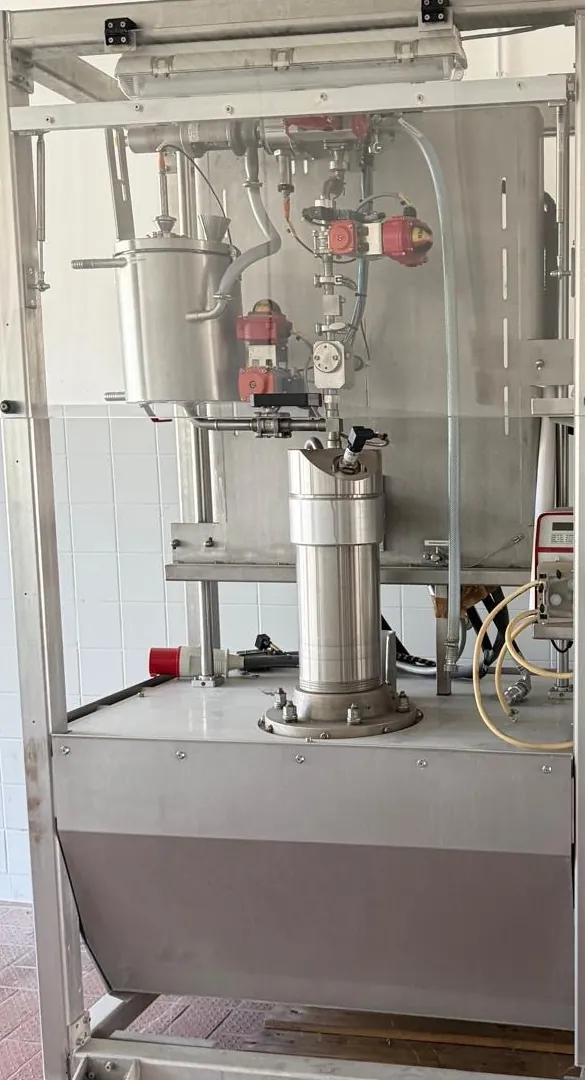
- Feed vessel for water and fine rock powder.
- Pump for the circulation loop.
- Reactor column with narrow gaps for cavitation.
- Gas collection at the head of the column.
- Control system for operation.
- The prototype has been built.
- Measurements are still pending.
- Next step: laboratory proof of concept from Q1 2027.
- ETH Zurich is responsible for validation and testing.
The value proposition
What the process is intended to deliver
Four targets compared with today's routes.
On site
The unit is intended to be located where the hydrogen is needed. The aim is to eliminate pipelines, road transport and storage.
Product instead of waste
Alongside hydrogen, magnetite and quartz are obtained as mineral byproducts.
Simple operating conditions
Moderate temperatures, no deep drilling. Proven components such as pumps and throttle valves.
Compact and scalable
Starting in a container. Higher capacity is intended to come from parallel process lines.
These are development targets. Proof will follow in the laboratory and in the pilot.
The applications
Where Cavilysis H2 is intended to be used
Industry and refineries
Producing hydrogen on site
- Customer
- Sites with a continuous demand for hydrogen
- Offering
- Compact container unit at the point of use
- Target
- No transport, a replacement for fossil hydrogen
- Status
- Prototype built, proof pending
Mobility and refuelling stations
Hydrogen without deliveries
- Customer
- Operators of refuelling stations and vehicle fleets
- Offering
- Production directly at the refuelling station
- Target
- No delivery by truck
- Status
- Later expansion stage
In plain terms
What has been demonstrated and what has not
We draw a clear line between evidence and targets.
What we build on
- The physics of hydrodynamic cavitation
- The natural reaction of iron rich olivine with water
- The first prototype has been built
- The patent application has been filed
To be clarified in the laboratory and the pilot
- The effect of cavitation on the reaction
- Yields and energy demand in continuous operation
- Scale up from container to plant
ETH Zurich
ETH Zurich is part of the project. It is responsible for validation and testing. Laboratory proof of concept is planned from Q1 2027.
Questions
Frequently asked questions about Cavilysis H2
What is hydrodynamic cavitation?
Microscopic vapour bubbles that form in a fast flow and collapse again at once. This briefly generates high pressure and heat.
Does the process already work?
A first prototype has been built. Measurements are still pending. Laboratory proof of concept is planned from Q1 2027.
Who verifies the results?
ETH Zurich is part of the project. It is responsible for validation and testing.
Where does the raw material come from?
Olivine is an abundant mineral. Cavilysis H2 is designed for iron rich olivine, finely ground or pelletised.
What remains after the reaction?
Alongside hydrogen, magnetite and quartz are formed. Both are solid mineral substances.
How much energy does the process require?
We will measure this in the laboratory and in the pilot. Reliable figures are not yet available.
Can the process be scaled up?
That is the objective: from container to industrial module. Proof is still pending.
Cavilysis H2 is approaching laboratory proof of concept.
We are seeking investors and industrial partners to take this step with us.