
 Illustrative image
Project · CAVITON
CO2 becomes construction material
CAVITON is intended to bind CO2 directly at the kiln. The gas reacts with calcium from residues to form calcium carbonate. The end product is a construction material.
The challenge
Cement releases CO2 from the rock itself
A large share of the emissions cannot be avoided by switching fuels.
of global CO2 emissions come from the cement industry
of the emissions per tonne of cement come from the raw material limestone (Germany)
- The CO2 is locked in the limestone, not only in the fuel.
- More efficient kilns and alternative fuels do little to change this.
- Capture and storagerequires conditioning, pipelines and storage sites
- Conversion to methanoladditionally requires hydrogen
- Mineralisationdemonstrated in the laboratory, but slow: 180 minutes per trial
The gap: a compact process that operates on site, reacts quickly and yields a product.
The principle
CO2 turns back into limestone
In the kiln, the limestone gives off its CO2. CAVITON is intended to bind part of it again in mineral form.
The concept
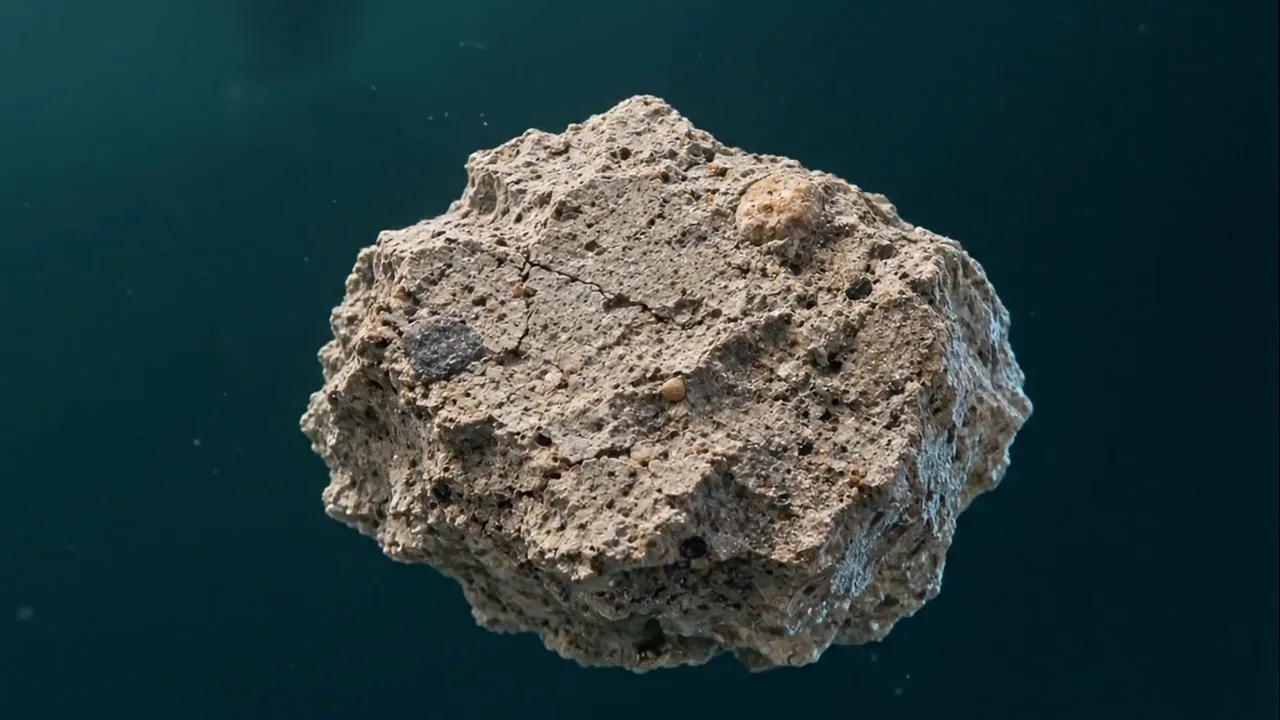
The film is a concept visualisation of the principle and not a measurement result. Hydrodynamic cavitation is intended to accelerate the reaction. ETH Zurich is responsible for validation and testing.
- Feedstocks
- Kiln flue gas, calcium bearing residues, water
- Product
- Construction material pellets or carbonated fines
- Intellectual property
- Patent application filed
The process
CAVITON in five steps
From flue gas to construction material.
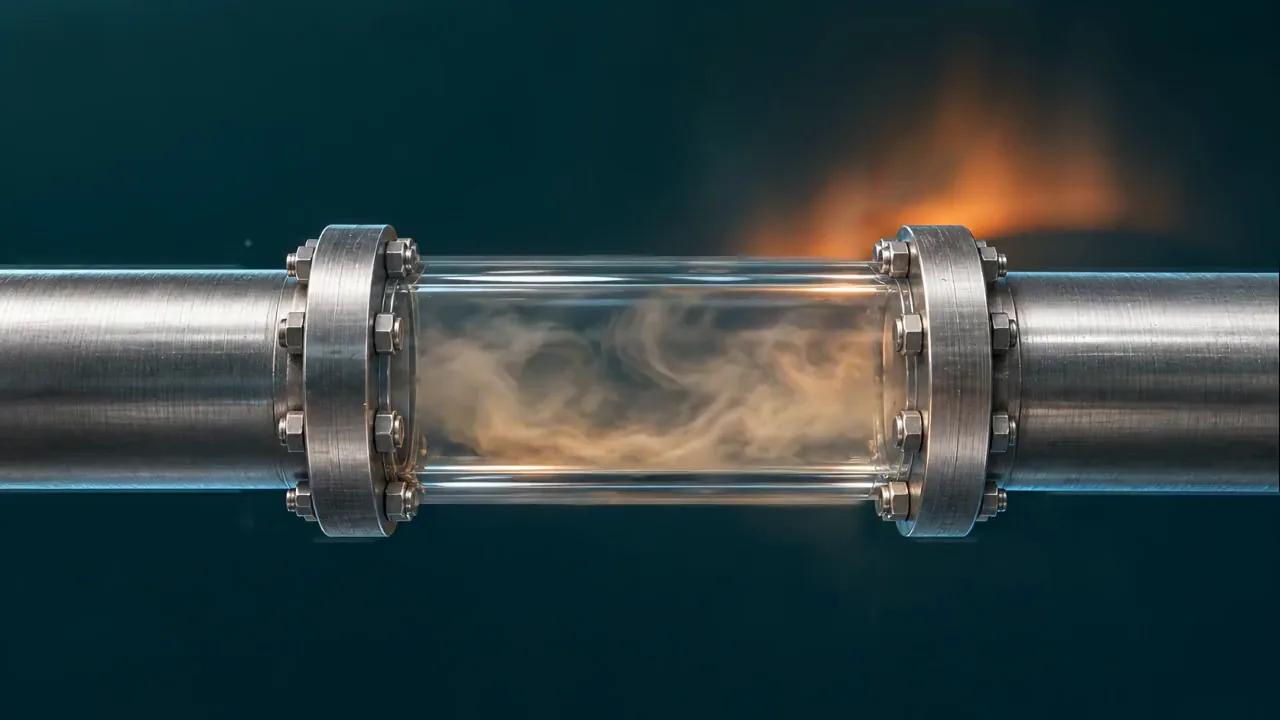
CO2 rich flue gas directly from the kiln
- The flue gas comes directly from the kiln and remains gaseous.
- The aim is to eliminate liquefaction and transport.
- CO2 that is not bound returns to the main gas stream.
The reaction in the reactor
- Calcium bearing residues are mixed with water.
- The slurry flows through a constriction. Hydrodynamic cavitation causes vapour bubbles to form and collapse at the particles.
- This is intended to expose fresh calcium, which reacts with the CO2.
Separating solids and water
- Proven equipment separates solids and water.
- The water is returned to the process.
- The solids go to pelletising or, as fines, to the cement mill.
Solids become pellets
- The solids are formed into pellets.
- The intended use is as aggregate or, ground, in cement.
- Product approval is still outstanding.
Further reaction in the kiln gas
- The pellets continue to cure in the CO2 rich kiln gas.
- Additional CO2 is intended to be bound in the process.
- The end result is intended to be a solid, storable construction material.
The film is a simplified concept visualisation and not a measurement result. Investors and partners receive technical details under a confidentiality agreement.
The comparison
Shorter chain, one product at the end
CAVITON alongside the two established routes for CO2.
| Criterion | Capture and storage | Methanol from CO2 | CAVITON (target) |
|---|---|---|---|
| Transport | Pipeline or ship | depending on the site | not required, bound on site |
| Hydrogen | not required | high demand | not required |
| Fate of the CO2 | Geological storage | released again on combustion | bound in mineral form |
| Product | none | Methanol | Construction material |
| Maturity | Large scale projects under construction | first industrial plants | Laboratory proof of concept pending |
Leico Leiser AG's own assessment. The statements on CAVITON are development targets.
The applications
Where CAVITON is intended to be used
Cement and lime
Binding CO2 directly at the kiln
- Customer
- Cement and lime plants with CO2 rich flue gas
- Offering
- CAVITON module on the flue gas stream
- Target
- Lower emissions, no transport, construction material as the product
- Status
- Laboratory proof of concept planned from Q1 2027
Construction materials
Upgrading residues into pellets and fines
- Customer
- Producers of cement, concrete and aggregates
- Offering
- Process for pellets and carbonated fines
- Target
- Residue becomes a construction material with bound CO2
- Status
- Patent application filed, product approval outstanding
The EU defines when CO2 counts as permanently bound
Delegated Regulation (EU) 2024/2620 supplements the Emissions Trading Directive. Among other things, it lists carbonated aggregates and carbonated constituents of cement.
Whether a product from the CAVITON process meets these requirements has yet to be demonstrated.
Binding in recycled concrete fines has been demonstrated in the laboratory
In a laboratory study published in 2025, recycled concrete fines in water took up 87 to 95 kg of CO2 per tonne after 180 minutes.
These figures come from the literature and not from our own measurements.
Potential business case
CAVITON as a complement in a cement plant with carbon capture
A concept for how our process is intended to support plants that will capture CO2 in future. It is a concept, not an ongoing project.
Carbon capture is energy intensive
- Cement plants are increasingly switching to firing with pure oxygen. Specialists refer to this as the oxyfuel process.
- The flue gas then consists largely of CO2 and water vapour.
- This gas is dried, purified, highly compressed and transported away. That consumes a great deal of energy.
A slipstream upstream of compression
- The module is intended to be installed downstream of the flue gas fan and upstream of compression.
- At this point, the gas is still warm, moist and close to atmospheric pressure.
- Kiln and capture unit remain unchanged. Gas that is not bound continues to compression.
Cooling
The warm gas is cooled and scrubbed with process water from the plant.
Activation
A rotor stator reactor mixes gas, water and milk of lime. Cavitation is intended to accelerate the reaction.
Mineralisation
In a stirred tank, the CO2 is intended to react with calcium at ambient pressure to form calcium carbonate.
Return
The product is intended to return to the cement or to construction materials as an additive.
- Part of the CO2 is intended to be bound before it is compressed. For this share, the aim is to eliminate compression and transport.
- Waste heat and water from the plant are intended to be used.
- The end result is intended to be a product that stays in the plant.
- The module is intended to be retrofittable as a containerised unit.
- For whom
- Cement and lime plants that are planning or building a capture unit
- What
- CAVITON module as a complement on the flue gas stream
- First step
- Pilot module on a slipstream
- Status
- Concept. Laboratory proof of concept planned from Q1 2027
Concept study by Leico Leiser AG. What share of the CO2 can be bound and how much energy this saves is to be shown first in the laboratory and then in a pilot module. Discussions with potential industrial partners are among the next steps.
In plain terms
What has been demonstrated and what has not
We draw a clear line between evidence and targets.
What we build on
- The physics of hydrodynamic cavitation
- Binding of CO2 in recycled concrete fines in the laboratory: 87 to 95 kg per tonne (literature)
- The patent application has been filed
To be clarified in the laboratory and the pilot
- The effect of cavitation on the reaction
- Yields and energy demand in continuous operation
- Approval of the construction material
- Scale up from container to plant
- Integration into a plant with carbon capture
ETH Zurich
ETH Zurich is part of the project. It is responsible for validation and testing. Laboratory proof of concept is planned from Q1 2027.
Questions
Frequently asked questions about CAVITON
What happens to the bound CO2?
It becomes calcium carbonate, in other words limestone. In this form, it remains permanently bound in the construction material.
Where does the calcium come from?
From residues of the cement and concrete industries, for example recycled fines from waste concrete and kiln dusts.
Does the process already work?
Binding of CO2 in recycled concrete fines has been demonstrated in the laboratory. Whether hydrodynamic cavitation accelerates the reaction is what we intend to show in the laboratory from Q1 2027.
Who verifies the results?
ETH Zurich is part of the project. It is responsible for validation and testing.
Does CAVITON replace carbon capture and storage?
No. CAVITON complements these routes. A slipstream of the flue gas is intended to be turned into construction material directly at the kiln.
Does the bound CO2 count under emissions trading?
Delegated Regulation (EU) 2024/2620 sets out the requirements for permanently bound CO2. Whether a product from the CAVITON process meets them has yet to be demonstrated.
Can the process be scaled up?
That is the objective: from container to industrial module. Proof is still pending.
Is CAVITON suitable for a cement plant that captures CO2?
That is the idea behind our potential business case. A module is intended to be installed on a slipstream upstream of compression and bind part of the gas directly into construction material. Kiln and capture unit remain unchanged. Proof is still pending.
CAVITON is approaching laboratory proof of concept.
We are seeking investors and partners from the cement and construction materials industries.